

This versatile roasted garlic and chive herb compound butter one of my favorite super versatile kitchen hacks for adding a ton of flavor to so many of my favorite dishes. Mostly I use it under the skin when roasting poultry like chicken or turkey, but I've also sliced and melted it on top of freshly grilled steak, and have even used it in biscuit dough.
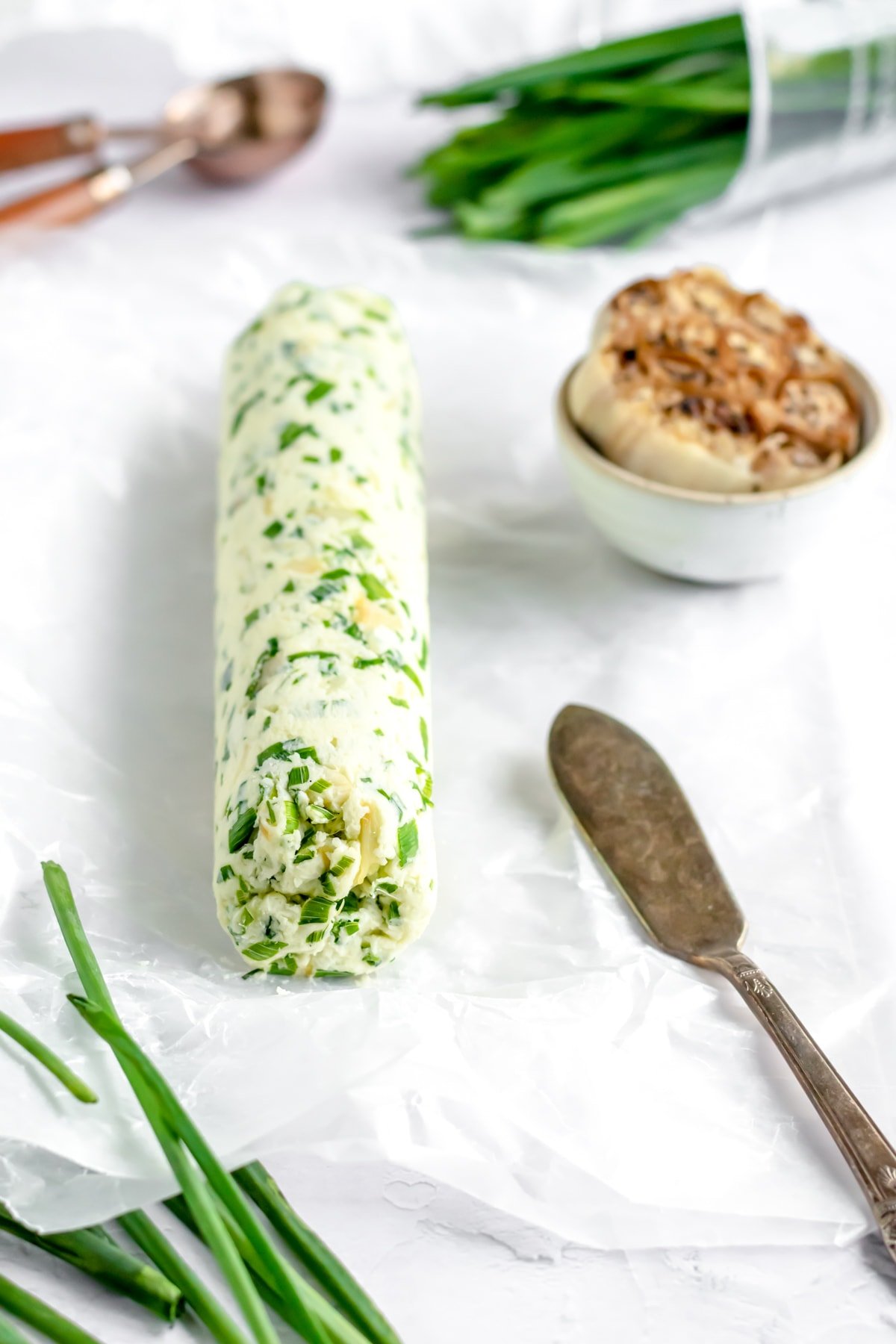
Once I got the hang of making homemade butter in my stand mixer, it was only a matter of time before I started experimenting with adding lots of flavor to it. So let's talk about how to make herb butter, aka compound butter!
Compound butter is a mixture of butter and other ingredients compounded together. Sometimes compound butter is called "finishing butter," but that's really more about how it's used; not all compound butters are finishing butters.
If your only association with compound butter is to pair it with meat, consider this encouragement to try it with freshly steamed rice or grains, slathered onto bread or biscuits, or using it on roasted or steamed vegetables like broccoli or carrots.
Making compound butter is also a great way to preserve fresh herbs before they go bad. No waste here!
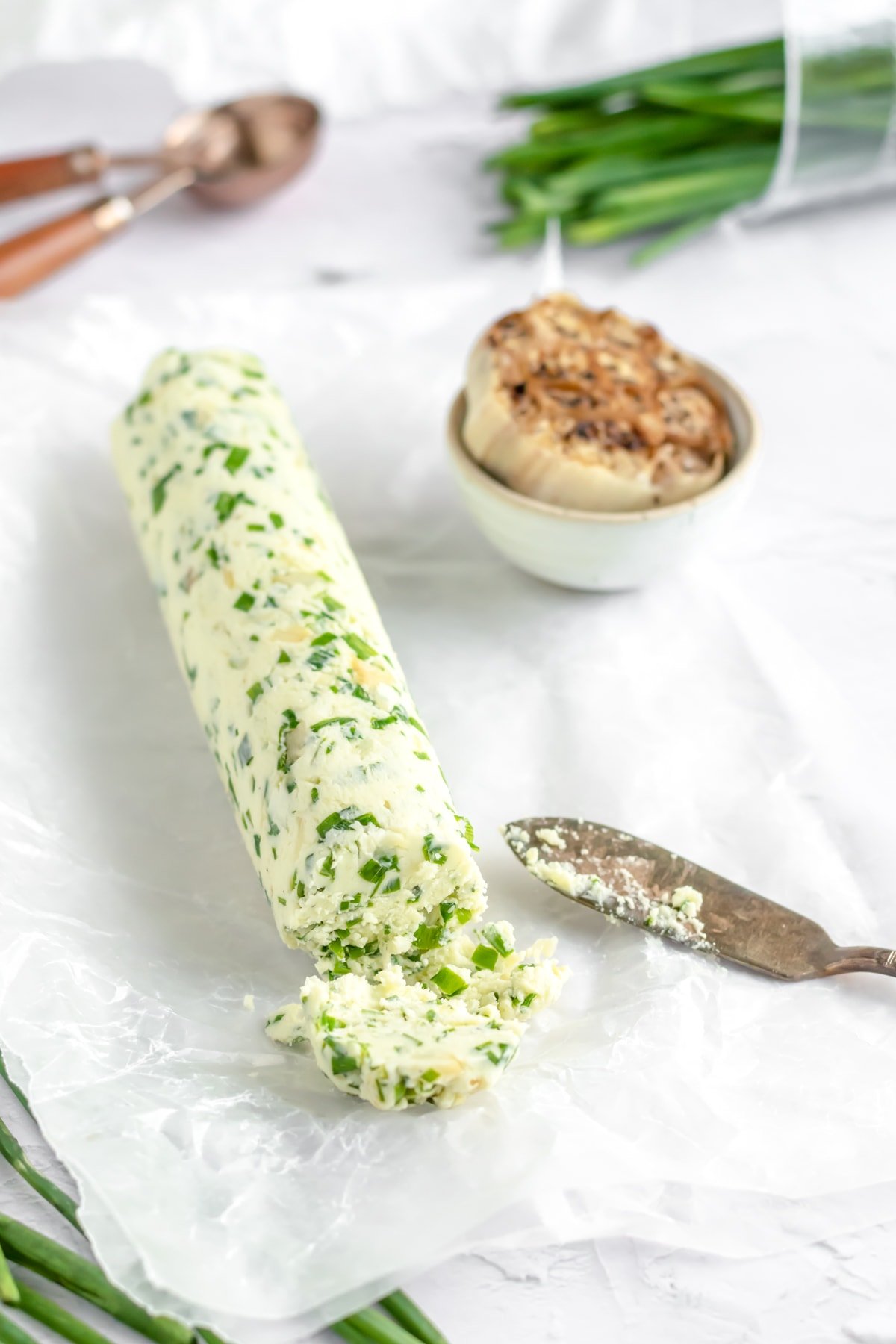
When I make this compound butter, I use unsalted butter so I can control how much salt I'm adding to it. If you use salted butter, taste it before deciding whether to add more salt. You can also use European-style butter, extra-creamy butter, etc.
I did several tests of this garlic herb butter to compare different ratios of garlic and chives to butter, as well as comparing raw garlic to roasted garlic. The roasted garlic won by a mile.
The fat in the butter is so good at being infused with flavor that even just one or two raw cloves of garlic was far too intense; definitely a no-kissing-for-several-hours kind of nuclear garlic breath situation. But a whole bulb of roasted garlic is mellow and slightly sweet when added to the butter. It's the perfect counterpart to the slightly sharper allium-ness of the fresh chives. I always let the cloves cool slightly before adding them to the soft butter so the butter doesn't melt.
While I normally use coarse Diamond Crystal Kosher Salt in my recipes, in the case of a compound butter, I find fine sea salt mixes into the butter more evenly so I use that.
You can definitely play around with your own preferred herb combinations when you make it, but I like to add some other finely minced fresh herbs like rosemary and sage to my garlic chive butter for a slightly more complex flavor profile.
Compound butter is infinitely customizable with tons of variations. Here are some twists on this herby compound butter you can try:
- Raw garlic - If you want a sharper, more intense garlic flavor, use raw garlic instead of roasted garlic. Grate it on a microplane or mince it finely. If you're using the jarred pre-minced garlic, spoon it out onto a paper towel first to absorb moisture before adding it to the butter.
- Scallions - They'll give you a sharper, more onion-y flavor than the chives do.
- Lemon - Add the zest of one lemon to the butter for a zesty, tangy, acidic flavor.
- Spicy - Add a pinch of red pepper flakes or cayenne to the garlic bulb before roasting it.
- Rosemary - Replace the chives with 2 tablespoons minced fresh rosemary. Rosemary has quite a strong flavor, so you don't need quite as much of it as you do the chives.
📖 Recipe
Roasted Garlic and Chive Compound Butter for Poultry
Recipe Notes
- Store compound butter tightly wrapped in the fridge 5-7 days, or in the freezer up to 6 months.
- Plain butter has a much longer shelf life, since it hasn't been mixed with fresh herbs or garlic that shorten that "best by" date. Storage is the same if you're using homemade butter as the base, as long as you rinsed the butter and herbs well. If you're going this route, I recommend making it no more than a day or two before you plan to use it, just to be safe. Wrap tightly and freeze whatever is left as soon as you're done.
- If you're planning on using this butter in a recipe that has other salt added, you should omit the salt from the butter. If you're using the butter as a spread, the salt helps add a lot of flavor. But it's not necessary.
- If you want to use jarred garlic, "roast" it in a skillet over low-medium heat until it starts to turn golden brown. Then add it right into the butter just like you would the garlic cloves. About 3 tablespoons of toasted jarred garlic is equivalent to one bulb of roasted garlic.
Ingredients
- 1 bulb roasted garlic (cloves removed from papery skins)
- 6 oz butter (homemade butter preferred)
- ½ cup chopped chives
- 1 tablespoon minced rosemary
- ½ tablespoon minced sage (or thyme)
- ½ teaspoon fine sea salt (optional)
Instructions
- Soften butter. Bring butter to room temperature by leaving it out overnight or for several hours. You should be able to easily press a finger into it, but it shouldn't be melted or greasy.NOTE: If using homemade butter, proceed from here directly after rinsing but before chilling the butter.
- Roast garlic. Cut off the top of a bulb of garlic, place it in a ramekin or the center of a sheet of aluminum foil. Drizzle with olive oil, salt, and pepper and roast in the oven for 30-45 minutes until golden brown and fragrant. The cloves should shrink slightly in their papery wrappers.When cool enough to handle, use a fork or paring knife to remove the cloves from their papery wrappers. Mash the garlic cloves with a fork and set aside until ready to use.
- Combine softened butter, roasted garlic cloves, fresh herbs, and salt (if using) in a bowl or using the paddle attachment on your stand mixer. Mix until very well combined.
- Cut a sheet of parchment paper about 10" long.
- Transfer the softened compound butter to the center of the parchment paper in a long, rough log shape.
- Fold the top of the parchment paper forward over the log of butter. Place your hand on the bottom sheet of parchment paper near you to anchor it in place. Then press a bench scraper at an angle into the top layer of parchment paper where the butter log meets the counter. This will create tension in the parchment paper and force the butter into a long smooth log shape. Repeat until the log is as long as you want.
- Wrap any remaining parchment paper around the log of butter and place in the fridge to firm up, at least 1 hour. Once the butter is fairly firm, wrap the log well in plastic wrap and store in the fridge until ready to use.
haley says
so yummy.