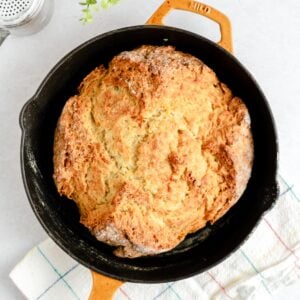
Quick Irish Soda Bread with Buttermilk
Crusty and slightly buttery Irish soda bread is my go-to bread recipe when I want bread on the table ASAP but don't have time to wait for a yeasted dough to rise. It takes about 5 minutes to mix the dough, then it's into the oven and ready in less than an hour, easy-peasy. I make my soda bread without currants, but have included them as an option in case you want to add them!
Ingredients
- 480 grams all-purpose flour (plus more for dusting)
- 15 grams diamond crystal kosher salt
- 12 grams baking soda
- 10 grams sugar
- 380 grams buttermilk (cold from the fridge)
- 70 grams unsalted butter, cold from the fridge (5 tablespoons)
- 43 grams unsalted butter, melted (3 tablespoons)
- 75 grams currants (optional)
For the pan
- 7 grams unsalted butter (½ tablespoon, melted)
Instructions
- Preheat. Preheat the oven to 400°F. Brush the bottom of a cast iron skillet with a thin layer of melted butter; set aside.
- Mix. Whisk flour, salt, sugar, and baking soda (and currants, if using) together in a medium mixing bowl. Grate 70g of the cold butter into the middle of the bowl on the large holes of a grater. Melt the remaining 43g of butter in a small bowl. Use a dough whisk to stir the grated butter into the dry ingredients. Make a well in the center and pour in the cold buttermilk, followed by the melted butter. Stir with a dough whisk until a sticky, messy dough forms. It's okay if there are still some loose bits of flour and dry patches. Switch to a bowl scraper and fold the dough over itself a few times in the bowl until it comes together, though it might still look dry.
- Knead. Turn the lumpy dough onto a lightly floured counter. Knead briefly with a gentle touch, just enough to bring the dough together in one mass. The dough is stickier than it looks, so dust your hands with flour as needed to prevent sticking. Some dough may cling to your hands as you work, that's fine.
- Shape. Shape the dough into a ball by cupping your hands around it, almost like you're packing a snowball. Again, dust with flour as needed to prevent sticking. If there are any large cracks or shingled pieces of dough on the top, try to get them tucked inside the dough ball. Dust the top lightly with flour, then place the dough in the middle of the prepared cast iron skillet.
- Score. Use a sharp knife to cut an 'X' about ¼-½" deep across the top of the loaf. Optional: Brush with any excess melted butter from when you buttered the pan before baking.
- Bake. Bake until deep golden brown on top, and a thermometer inserted deep into the center reaches 190°F, 40-45 minutes. Let the soda bread cool in the pan on a wire rack, then remove it to the wire rack to finish cooling. Soda bread is wonderful slightly warm or toasted!
Microwave the butter in 5-10 second bursts. When a few pieces of butter are still visible, stop microwaving and stir until they're melted to prevent the dreaded microwave butter explosion.
Do not overwork the dough or it will end up dense and tough. Stop kneading as soon as the dough comes together cohesively. It's okay if its lumpy.
RECIPE NOTES
- This recipe uses 113g of butter total. If you're in America, that's one stick (½ cup/8 tablespoons/4 oz).
- Using the 2x/3x buttons only changes the ingredient quantities to the left of the ingredients list. The amounts given in the recipe or to the right of the ingredients list will not change automatically; you will have to do that math yourself.
- Baking soda only stays good for about 6 months, after that it starts losing potency. Make sure yours is fresh for best results!
- If you don't have buttermilk, you can use 6 tablespoons of buttermilk powder and replace the buttermilk with milk (Note: I have not tested this swap with non-dairy milk alternatives). You may need to add more flour or milk to get the dough to the right texture: more milk if the dough is dry, more flour if the dough is too wet.